
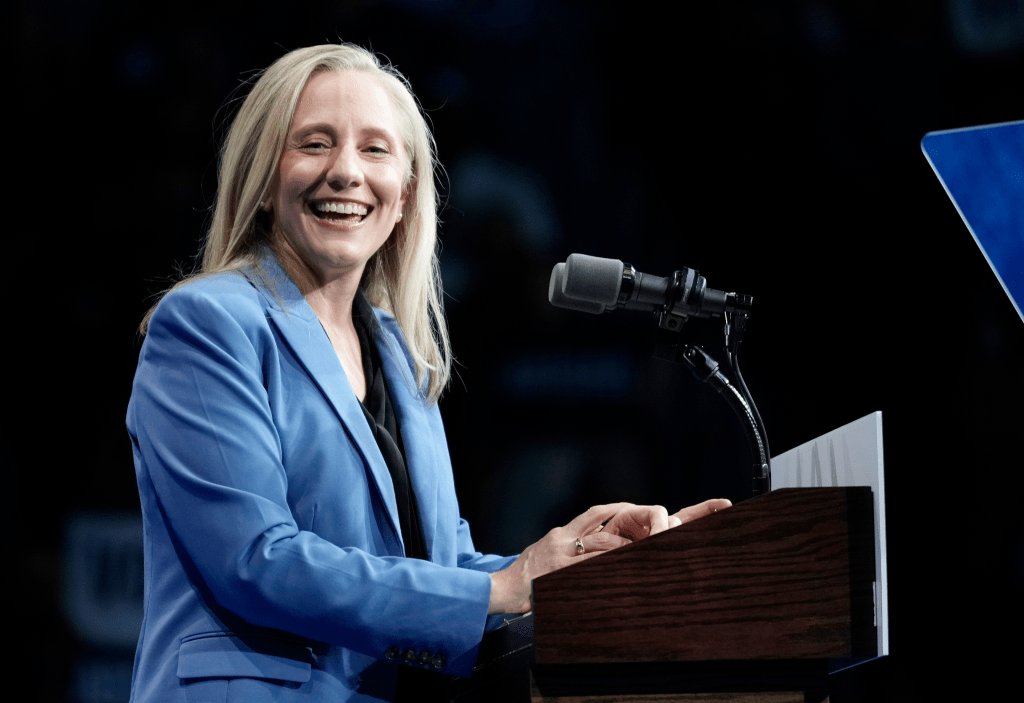
By Michael Phillips | VABayNews
Governor-elect Abigail Spanberger enters office on January 17, 2026, following a decisive gubernatorial victory that signaled voter concern about one issue above all others: affordability. With housing, healthcare, energy, and education costs continuing to strain household budgets—particularly in Northern Virginia—Spanberger has made cost-of-living relief the centerpiece of her early governing agenda.
Her recently unveiled Affordable Virginia Agenda, first detailed in reporting by The Washington Post, represents her opening legislative salvo. The package includes more than a dozen bills aimed at lowering everyday costs while projecting a pragmatic, bipartisan tone meant to reassure moderates and center-right voters wary of ideological overreach.
Healthcare: Cost Control Without Single-Payer
Spanberger’s healthcare proposals focus on targeted reforms rather than sweeping system changes. Central to the plan is increased oversight of pharmacy benefit managers (PBMs), with the stated goal of lowering prescription drug prices and protecting independent pharmacies. Additional measures aim to limit excessive prior authorizations for chronic and cancer care, stabilize Virginia’s Affordable Care Act marketplace as federal subsidies expire, and reduce catastrophic medical debt.
For center-right Virginians, the significance lies less in the policy mechanics and more in what Spanberger is not proposing. She has repeatedly rejected single-payer healthcare and broad-based tax increases, framing her approach as cost containment rather than government expansion.
Housing: Supply, Preservation, and Local Control
Housing affordability remains one of Virginia’s most acute challenges, particularly in the Washington, D.C. metro area, where rents and home prices have surged. Spanberger’s plan seeks to increase housing supply by streamlining permitting and redevelopment reviews while preserving existing affordable units through tools like local rights of first refusal.
Supporters see a flexible, locality-driven framework that avoids one-size-fits-all mandates. Critics counter that preservation-heavy policies may do too little to spur large-scale new construction and could increase state spending through expanded bonding and loan programs. For a state that has long marketed itself as business-friendly, the execution of these reforms will matter as much as the rhetoric.
Energy: Balancing Demand, Jobs, and Rates
Energy policy may prove the most politically sensitive component of Spanberger’s agenda. Her proposals expand access to small-scale solar, increase energy storage targets, and grow efficiency programs for low-income households—all while addressing surging demand driven by Northern Virginia’s data center boom.
Spanberger argues these steps will lower long-term utility bills, strengthen grid reliability, and create jobs. Republicans warn that additional mandates could push costs onto ratepayers. The debate echoes earlier disputes during the administration of outgoing Governor Glenn Youngkin, who vetoed similar legislation over affordability concerns.
Education: Investment Over Ideology
While not formally part of the Affordable Virginia package, education remains a parallel priority. Spanberger has emphasized public school investment, teacher recruitment, career and technical education, and learning recovery over voucher programs or culture-war legislation. Her opposition to private school vouchers puts her at odds with many conservatives, but her focus on workforce readiness and accountability has drawn interest from pragmatic moderates.
A Center-Right Appeal—With Caveats
Spanberger’s background as a former CIA officer and her record as a centrist member of Congress helped her win a landslide in a politically competitive state. She has consistently opposed “defund the police” rhetoric, emphasized fiscal restraint, and avoided the most polarizing cultural battles. These traits underpin her appeal to center-right Virginians who prioritize stability, public safety, and economic growth.
Still, skepticism remains. Republicans argue that her energy and healthcare proposals risk higher long-term costs, while her stances on abortion, immigration enforcement, and school choice align firmly with Democratic priorities. With budget pressures looming and federal policies in flux, her promise of affordability without tax hikes will face early tests.
The Bottom Line
Abigail Spanberger begins her governorship with strong political momentum and a clear mandate to address cost-of-living pressures. Her Affordable Virginia Agenda reflects a governing philosophy that blends Democratic policy goals with a moderate, bipartisan style. Whether that balance translates into tangible relief—or higher costs masked by good intentions—will be determined quickly as the 2026 General Assembly session unfolds.
For center-right Virginians, Spanberger represents neither a progressive firebrand nor a status-quo caretaker, but a pragmatic Democrat whose performance will be judged less by ideology and more by outcomes.
Support Independent Journalism
Virginia Bay News is part of the Bay News Media Network — a growing group of independent, reader-supported newsrooms covering government accountability, courts, public safety, and institutional failures across the country.
Support independent journalism that isn’t funded by political parties, corporations, or government agencies
Submit tips or documents securely — if you see something wrong, we want to know
Independent reporting only works when readers stay engaged. Your attention, tips, and support help keep these stories alive.
 Virginia Bay News