
By Michael Phillips | Virginia Bay News
A newly filed federal lawsuit is reigniting debate over safety, staffing, and accountability inside Virginia’s prison system following the death of a correctional officer earlier this fall. While the tragedy has drawn sympathy across the political spectrum, the legal response raises harder questions about whether sweeping federal oversight is the right solution—or a sign of deeper state-level failures left unaddressed for too long.
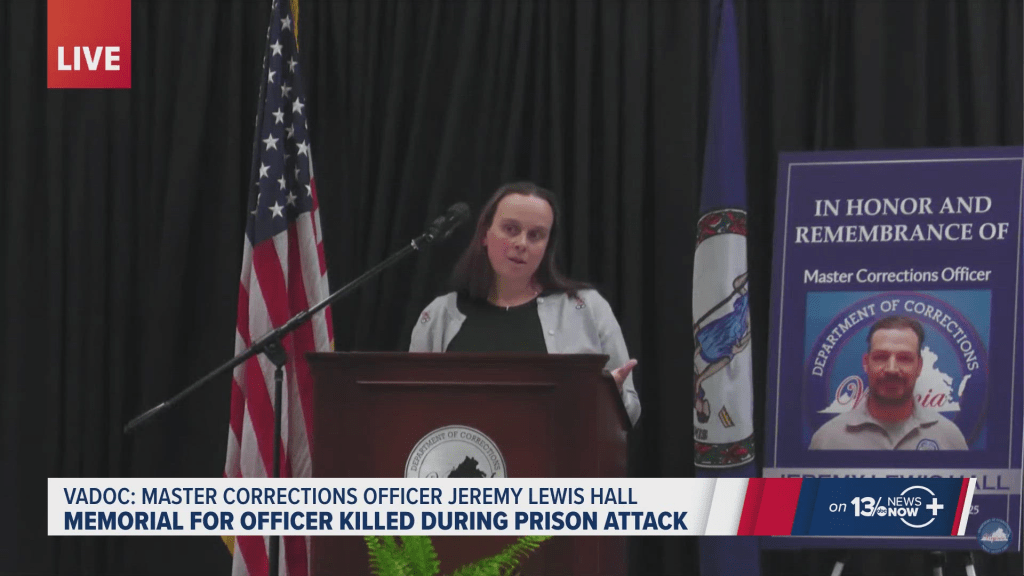
The lawsuit, filed in U.S. District Court for the Eastern District of Virginia, stems from a November 17, 2025, attack at River North Correctional Center, where Master Corrections Officer Jeremy Lewis Hall was killed by an inmate during morning operations. Two other officers were injured in the attack.
Hall, 40, had worked for the Virginia Department of Corrections (VADOC) since 2024. His death has become a rallying point for officers who say chronic understaffing, ignored threat warnings, and a culture of retaliation have made already dangerous jobs even more perilous.
What the Lawsuit Claims
Unlike many high-profile civil rights cases, the suit does not seek monetary damages. Instead, it asks for injunctive relief—court-ordered reforms and ongoing federal oversight of VADOC operations statewide, similar to a consent decree.
The plaintiffs include Hall’s widow and a current correctional officer at another Virginia facility. Their claims allege:
- Ignored threat intelligence prior to the attack at River North
- Severe understaffing, forcing officers to work high-risk posts without backup
- Policies that discourage emergency responses in order to meet administrative metrics
- Retaliation against officers who report safety concerns or seek legal advice
The complaint argues these conditions amount to “deliberate indifference” to officer safety, raising constitutional concerns under federal civil rights law.
A Staffing Crisis Years in the Making
From a center-right perspective, the most underexamined issue is not ideology or litigation strategy—it’s basic governance.
Virginia’s prison system has struggled with staffing shortages for years. As of fall 2025, vacancy rates hovered around 25–30% statewide, with some facilities reportedly far worse. Officers describe mandatory overtime, frequent lockdowns, and delayed medical responses—conditions that increase danger for staff and inmates alike.
Consultant reports commissioned by the state in recent years have already flagged these risks. Yet meaningful reforms—competitive pay, retention incentives, or structural changes—have moved slowly through Richmond, often overshadowed by broader criminal justice debates.
This raises an uncomfortable question: if state leaders had acted decisively earlier, would a federal lawsuit even be on the table?
Oversight vs. Accountability
Supporters of the lawsuit argue that VADOC has proven unable to “police itself,” making court supervision necessary to protect lives. Critics counter that federal oversight risks turning a state agency into a compliance bureaucracy, driven more by court mandates than practical safety outcomes.
For many Virginians, especially those with family members working in corrections, the concern is simpler:
- Will this actually make prisons safer?
- Or will it add another layer of management without fixing the staffing crisis at the root of the problem?
There is also skepticism that federal judges—removed from day-to-day prison operations—are better positioned than state officials to manage corrections policy. At the same time, continued inaction by lawmakers makes that argument harder to sustain.
The Broader Public Safety Stakes
This case is not just about prisons. Unsafe facilities affect everyone: officers, inmates, and the communities inmates eventually return to. Lockdowns disrupt rehabilitation programs, mental health treatment, and job training—key factors in reducing recidivism.
Ironically, this has created rare alignment between correctional officers and criminal justice reform advocates, both of whom argue that chronic understaffing undermines safety and accountability.
What Comes Next
The criminal case against the accused inmate is proceeding separately in state court. The federal civil case is just beginning, and it remains unclear how far a judge will be willing to go in ordering statewide reforms.
What is clear is this: Officer Hall’s death has exposed long-simmering failures that can no longer be dismissed as isolated incidents. Whether through legislative action or judicial intervention, Virginia’s leaders will be forced to confront a system stretched past its limits.
For a state that prides itself on competent governance, allowing prisons to drift into crisis—until tragedy strikes—is not a conservative outcome, nor a responsible one.
Support Independent Journalism
Virginia Bay News is part of the Bay News Media Network — a growing group of independent, reader-supported newsrooms covering government accountability, courts, public safety, and institutional failures across the country.
Support independent journalism that isn’t funded by political parties, corporations, or government agencies
Submit tips or documents securely — if you see something wrong, we want to know
Independent reporting only works when readers stay engaged. Your attention, tips, and support help keep these stories alive.
 Virginia Bay News