
By Michael Phillips | Virginia Bay News
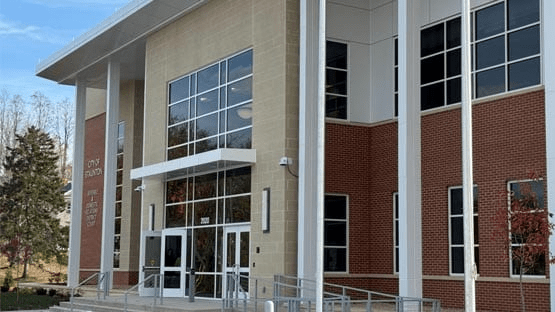
The City of Staunton officially opened its new Juvenile and Domestic Relations District Court (J&DR Court) on Thursday, December 18, 2025, marking the completion of one of the largest civic construction projects in the city’s modern history.
City leaders celebrated the milestone with a ribbon-cutting ceremony and public open house, held despite steady rain. Michele Edwards, Staunton’s mayor, described the new courthouse as a “special” investment that will better serve families and children navigating sensitive court proceedings.
There is little dispute that the old arrangement—sharing space with Augusta County in a downtown facility—had reached the end of its useful life. But while the new building solves real safety and compliance problems, it also raises serious questions about cost, unfunded mandates, and long-term taxpayer impact.
Why a New Court Was Required
The new J&DR Court replaces the former shared courthouse at 6 East Johnson Street, which the Commonwealth of Virginia declared non-compliant with safety and security standards in 2021. Shortly thereafter, Augusta County voters approved a referendum to relocate their courts to Verona, leaving Staunton with little choice but to build its own independent facility.
Unlike court operations—largely funded by the state—courthouse construction in Virginia is a local responsibility. The state sets the standards but provides no direct funding for new buildings, forcing cities like Staunton to shoulder the full financial burden.
A Modern Facility in the West End
The new two-story, 34,000-square-foot courthouse sits along West Beverley Street in Staunton’s West End, on the redeveloped site of the former Chestnut Hills Shopping Center. The building includes:
- Two secure courtrooms
- Dedicated space for the Clerk’s Office and Sheriff’s Office
- Court Service Unit offices
- Satellite offices for prosecutors, public defenders, and victim advocates
City officials tout the design as safer, more dignified, and better suited to juvenile and family cases than the outdated downtown facility.
The Price Tag: A Real Concern for a Small City
Construction alone cost approximately $18.8 million, handled by Howard Shockey & Sons, with total project costs estimated between $20 million and $25 million once land acquisition, demolition, and site work are included. The city authorized up to $35.5 million in bonds to ensure flexibility, though officials say final costs came in well below that ceiling.
Still, for a city of roughly 25,000 residents, the debt is significant. Bond payments will be covered through Staunton’s general fund over the next 15 to 20 years—meaning local taxpayers ultimately foot the bill.
From a center-right perspective, this highlights a recurring problem in Virginia governance: state mandates without state money. Richmond declares facilities unsafe, but cities and counties are left scrambling to borrow and build.
Revitalization or Wishful Thinking?
City leaders frame the courthouse as a “civic anchor” that will help revitalize the West End, transforming a long-vacant retail site into a hub for economic growth. While government buildings can bring foot traffic, history suggests that public construction alone rarely sparks sustained private investment.
Economic revitalization is more reliably driven by lower taxes, reduced regulation, and private-sector confidence—not just government projects.
A Necessary Upgrade, With Open Questions
The new J&DR Court undoubtedly improves security, accessibility, and dignity for families and children involved in difficult legal matters. It also restores Staunton’s full control over its court services after years of shared arrangements.
But the opening should also prompt honest discussion about cost discipline, long-term debt, and whether Virginia should reconsider its practice of imposing expensive requirements on localities without financial support.
For concerned citizens, the lesson is clear: better facilities matter—but fiscal accountability matters too.
Support Independent Journalism
Virginia Bay News is part of the Bay News Media Network — a growing group of independent, reader-supported newsrooms covering government accountability, courts, public safety, and institutional failures across the country.
Support independent journalism that isn’t funded by political parties, corporations, or government agencies
Submit tips or documents securely — if you see something wrong, we want to know
Independent reporting only works when readers stay engaged. Your attention, tips, and support help keep these stories alive.
 Virginia Bay News