
By Michael Phillips | VABayNaws
A newly introduced bill in the Virginia General Assembly is reigniting debate over politics in the classroom, academic freedom, and whether the state should dictate historical interpretation to students.
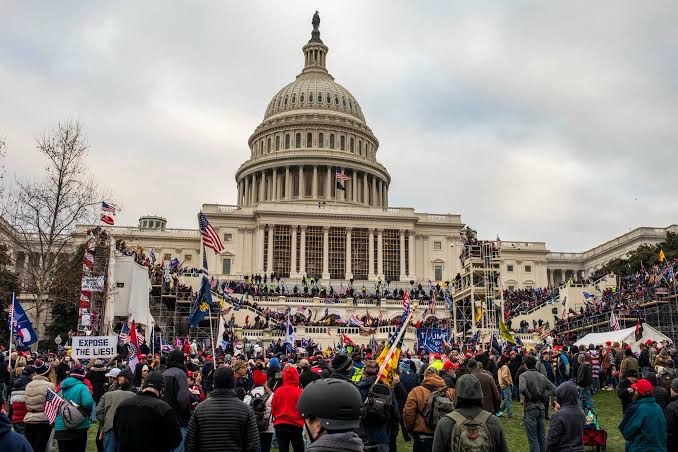
House Bill 333, introduced by Dan Helmer, would allow Virginia school boards to offer instruction on the events of January 6, 2021—but only if that instruction follows a tightly prescribed narrative written into state law.
The bill was first highlighted publicly this week by Nick Minock, a reporter for WJLA/7News, who noted that the legislation requires schools to describe January 6 as “an unprecedented, violent attack on United States democratic institutions… for the purpose of overturning the results of the 2020 presidential election.”
What the Bill Does—and Doesn’t Do
HB 333 does not require schools to teach January 6. Instead, it establishes a set of mandatory rules that apply if a school chooses to cover the topic.
Under the bill, any instruction, curriculum, or teacher discussion related to January 6:
- May not describe the event as a peaceful protest
- May not present claims of widespread election fraud as credible
- Must adopt the bill’s specific language framing January 6 as an unprecedented violent attack aimed at overturning the election
In effect, the bill permits instruction only if educators accept a single, state-approved interpretation of the event.
A Growing Pattern of Politicized Curriculum
Supporters argue the bill simply reflects legal and historical consensus. But critics—particularly from the center-right—see something more troubling: the government compelling speech and restricting inquiry in K-12 classrooms.
Virginia has already witnessed years of heated debate over school content, from race and history curricula to gender and parental notification policies. HB 333 risks deepening public mistrust by signaling that certain political conclusions are no longer open for discussion—only recitation.
This concern is not about denying violence or criminal behavior on January 6. Most Virginians, across the political spectrum, acknowledge that serious crimes occurred and that those responsible should be held accountable.
The issue is whether the legislature should pre-write historical conclusions into law, especially for events still being actively debated in courts, media, and scholarship.
Compelled Speech, Not Education
Traditionally, education policy sets learning standards—dates, documents, civic structures—while allowing teachers to present facts and encourage analysis. HB 333 departs from that model by:
- Prohibiting certain interpretations outright
- Mandating specific descriptive language
- Eliminating contextual discussion of disputed political questions
Ironically, many of the same lawmakers backing HB 333 have criticized other states for restricting classroom speech on controversial topics. Here, Virginia appears to be moving in the opposite direction—substituting professional judgment with legislative decree.
Why This Matters Beyond January 6
Even for Virginians who agree with the bill’s characterization of January 6, the precedent should raise alarms.
If lawmakers can dictate how one modern political event must be described, future assemblies could just as easily mandate language on other contentious issues—from foreign policy to public health to protest movements closer to home.
Education becomes less about learning how to think—and more about being told what to think.
What Comes Next
HB 333 was prefiled on January 11 and will be formally introduced on January 14, 2026. It has not yet been assigned to a committee, though it is likely headed to an education panel. Amendments, debate, or quiet shelving remain possible outcomes.
For now, the bill serves as an early marker of where Virginia’s 2026 session may be headed: renewed culture-war battles, framed as curriculum standards, with students caught in the middle.
Virginia parents and lawmakers alike will soon have to decide whether they want classrooms that encourage civic understanding—or enforce political orthodoxy.
Support Independent Journalism
Virginia Bay News is part of the Bay News Media Network — a growing group of independent, reader-supported newsrooms covering government accountability, courts, public safety, and institutional failures across the country.
Support independent journalism that isn’t funded by political parties, corporations, or government agencies
Submit tips or documents securely — if you see something wrong, we want to know
Independent reporting only works when readers stay engaged. Your attention, tips, and support help keep these stories alive.
 Virginia Bay News