
By VABayNews Staff
Virginia politics crossed a consequential line this week.
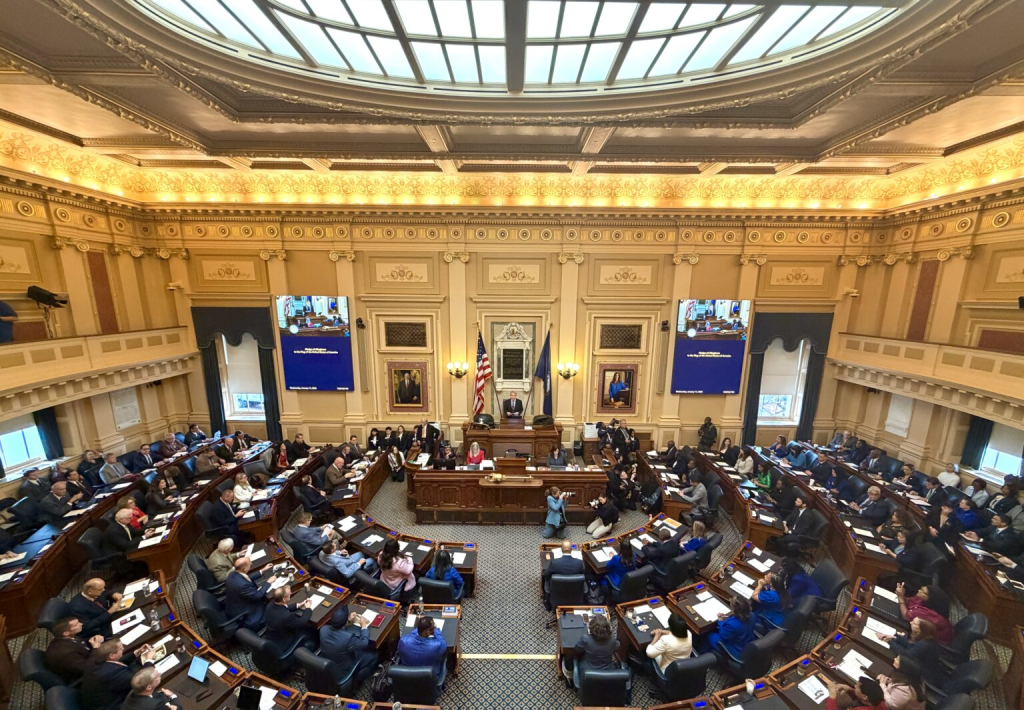
On Friday, the Virginia Senate approved House Joint Resolution 4 (H.J. 4)—a proposed constitutional amendment that would allow the General Assembly to redraw congressional districts mid-decade, bypassing the voter-approved independent redistricting process established just five years ago.
The vote was strictly along party lines: 21–18, with Democrats in favor and Republicans opposed.
Republican Rep. Jen Kiggans, who represents Virginia’s 2nd Congressional District, called the move what many critics believe it is: a transparent attempt to rig future elections under the banner of “fairness.”
What H.J. 4 Does
H.J. 4 amends the Virginia Constitution to grant lawmakers temporary authority to redraw congressional districts outside the normal post-census cycle. The justification offered by Democrats is that other states—particularly Republican-led ones—have engaged in mid-decade redistricting, and Virginia should have the same option.
The amendment would:
- Allow legislative redistricting through 2030
- Apply only to congressional districts
- Suspend the independent redistricting commission voters approved in 2020
- Take effect only if approved by voters in a statewide referendum, likely in April 2026
Democrats argue it is a “one-time” exception. Republicans note that power, once taken, has a habit of sticking around.
A Direct Reversal of the 2020 Reform
In 2020, Virginia voters overwhelmingly approved a constitutional amendment creating an independent redistricting commission—specifically to remove partisan map-drawing from the legislature. That reform passed with roughly two-thirds of the vote and was widely touted as a model for clean governance.
The current congressional map, drawn by a court after the commission deadlocked, produced a 6–5 Democratic advantage—a relatively competitive and balanced outcome.
Under H.J. 4, Democratic leaders have openly floated maps that could produce 10 Democrats and 1 Republican in Virginia’s congressional delegation.
That is not reform. It is reversal.
The Partisan Math Behind the Move
Democrats control both chambers of the General Assembly and will soon have a Democratic governor in Abigail Spanberger. With H.J. 4 in place, the party would have full control over congressional lines just months before the 2026 midterms.
Supporters frame this as “defensive”—a response to redistricting in states like Texas and North Carolina. But critics point out the contradiction: Virginia Democrats are abandoning an independent process they once championed because it no longer guarantees partisan advantage.
As Rep. Kiggans warned, this isn’t about leveling the field—it’s about tilting it.
Why This Matters Beyond Virginia
This vote places Virginia squarely in the middle of a national redistricting arms race, where each side justifies its actions by pointing to the excesses of the other.
But Virginia’s case is different. The state didn’t just change policy—it is asking voters to undo a constitutional safeguard they approved less than a decade ago.
If successful, the precedent is clear:
- Independent commissions are optional
- Voter mandates are conditional
- “Temporary” power grabs are acceptable if politically convenient
That should concern voters of all parties.
What Comes Next
- Statewide referendum expected in April 2026
- New congressional maps likely released before the vote
- Legal challenges are possible but uncertain
- Low-turnout dynamics could heavily influence the outcome
Republicans and reform advocates are already signaling a major public campaign to frame the referendum as a choice between voter trust and legislative overreach.
Bottom Line
H.J. 4 isn’t about fairness—it’s about control.
Virginia voters were promised an end to gerrymandering politics. Now, they’re being asked to give those same politicians the keys back, just in time for a critical election year.
The question facing Virginians this spring is simple:
Was the 2020 reform a principle—or just a phase?
Support Independent Journalism
Virginia Bay News is part of the Bay News Media Network — a growing group of independent, reader-supported newsrooms covering government accountability, courts, public safety, and institutional failures across the country.
Support independent journalism that isn’t funded by political parties, corporations, or government agencies
Submit tips or documents securely — if you see something wrong, we want to know
Independent reporting only works when readers stay engaged. Your attention, tips, and support help keep these stories alive.
 Virginia Bay News