
By VABayNews Staff
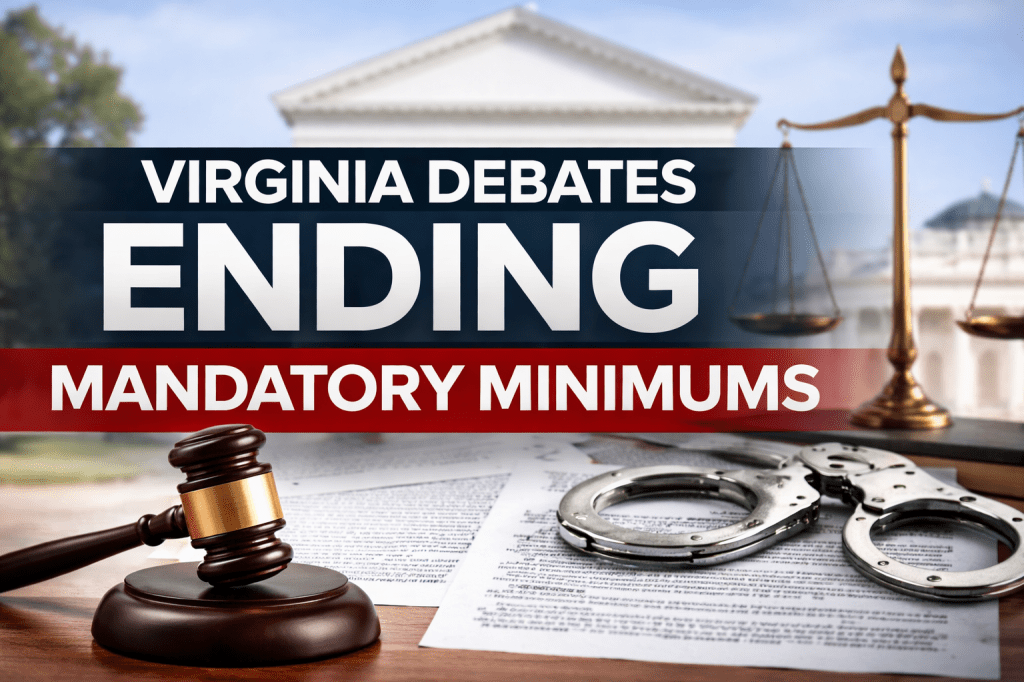
A newly introduced bill in the Virginia General Assembly is reigniting one of the most contentious debates in criminal justice policy: whether mandatory minimum sentences protect public safety—or undermine it.
House Bill 863 (HB 863), prefiled on January 13, 2026, by Delegate Rae Cousins (D), would eliminate mandatory minimum terms of confinement for a wide range of offenses under Virginia law. The bill is currently listed as “Committee Referral Pending” as the 2026 legislative session gets underway.
The proposal has drawn intense attention after a widely shared post on X highlighted its impact on some of the Commonwealth’s most serious crimes, including rape, child sexual exploitation, assaults on law enforcement officers, firearm offenses, and repeat violent felonies.
What HB 863 Would Change
HB 863 does not decriminalize any offenses, nor does it reduce maximum penalties. Instead, it removes sentencing “floors” that currently require judges to impose minimum prison terms upon conviction.
Among the crimes affected:
- Sexual offenses, including rape, forcible sodomy, object sexual penetration, and aggravated sexual battery
- Child pornography offenses, including possession, distribution, and production
- Assaults on law enforcement officers and other protected personnel
- Use or display of a firearm in the commission of a felony
- Aggravated involuntary manslaughter
- Enhanced penalties for repeat violent offenders
Under current law, many of these offenses carry mandatory minimum sentences—some measured in years—that judges must impose regardless of mitigating factors. HB 863 would give judges full discretion to determine sentences based on the circumstances of each case, offender history, and victim impact.
Supporters: Judicial Discretion Over “One-Size-Fits-All”
Supporters of the bill, including criminal justice reform organizations such as Justice Forward Virginia, argue that mandatory minimums are blunt tools that often produce unjust outcomes.
They contend that:
- Mandatory minimums do not reliably deter crime
- They contribute to over-incarceration and high taxpayer costs
- They limit judicial discretion and incentivize coerced plea deals
- They create disparities based on geography and prosecutorial leverage
Reform advocates often point to studies and past Virginia Crime Commission findings suggesting mandatory minimums have little impact on long-term public safety outcomes.
From this perspective, HB 863 is framed as a return to individualized sentencing—trusting judges, rather than statutes, to weigh the facts of each case.
Critics: A Dangerous Step for Violent Crime and Victims
Opponents, including many Republicans, law enforcement advocates, and victims’ rights groups, see the bill very differently.
Their concerns are focused less on theory and more on risk:
- Serious violent and sexual crimes could receive significantly lighter sentences
- Assaults on police officers may no longer carry guaranteed jail time
- Repeat violent offenders could avoid enhanced punishment
- Sentencing outcomes could vary widely by judge or jurisdiction
Critics argue that mandatory minimums exist precisely because some crimes are so severe that society has determined a baseline punishment is necessary—for accountability, deterrence, and justice for victims.
They also warn that removing these floors sends the wrong signal at a time when many Virginians remain concerned about crime, public safety, and respect for law enforcement.
Political Context
HB 863 reflects a broader trend within Democratic-controlled legislatures nationwide to revisit sentencing laws enacted during earlier “tough on crime” eras. Similar proposals have surfaced in Virginia before, including a 2021 effort that passed one chamber but failed to become law.
The current political environment may prove more favorable. Democrats now control the General Assembly, and Governor Abigail Spanberger has campaigned on reform-oriented governance—though she has not yet taken a public position on HB 863.
For now, the bill remains at an early stage, with committee hearings and amendments likely in the weeks ahead.
What Comes Next
Whether HB 863 advances or stalls will depend on how lawmakers balance competing priorities: judicial flexibility versus certainty of punishment, reform versus deterrence, and theory versus public confidence in the justice system.
At minimum, the bill has already accomplished one thing—forcing Virginia to confront a fundamental question: Should there ever be crimes for which the law guarantees prison time, no matter the circumstances?
That debate is just beginning.
Support Independent Journalism
Virginia Bay News is part of the Bay News Media Network — a growing group of independent, reader-supported newsrooms covering government accountability, courts, public safety, and institutional failures across the country.
Support independent journalism that isn’t funded by political parties, corporations, or government agencies
Submit tips or documents securely — if you see something wrong, we want to know
Independent reporting only works when readers stay engaged. Your attention, tips, and support help keep these stories alive.
 Virginia Bay News