
By VABayNews Staff
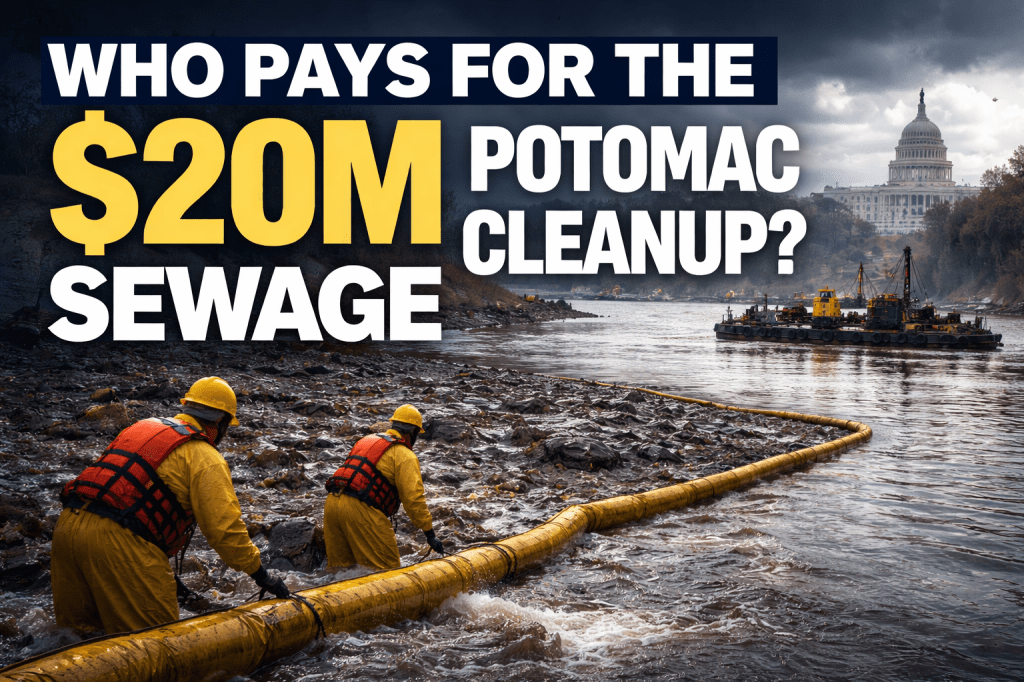
The cleanup and repair costs tied to the recent Potomac River sewage failure are now exceeding $20 million — and the question Virginia residents should be asking is straightforward:
Is any of this bill coming our way?
According to reporting from WTOP, the emergency response, infrastructure stabilization, environmental mitigation, and long-term monitoring are already driving significant costs. More expenses are expected as investigations and repairs continue.
The failure may have originated within D.C.-managed infrastructure connected to DC Water systems, but the Potomac River borders Northern Virginia communities including Arlington, Fairfax County, and Alexandria. Environmental consequences do not stop at jurisdictional lines.
A Regional Waterway, A Regional Impact
The Potomac is not just a D.C. river. It is a shared economic and environmental asset for Virginia.
It supports:
- Drinking water systems
- Tourism and recreation
- Waterfront property values
- Fishing and boating industries
If contamination spreads or cleanup costs are distributed regionally, Virginia families and ratepayers could feel financial effects — directly or indirectly.
That raises several important questions:
- Was the failure preventable?
- Were inspections and maintenance properly conducted?
- Who bears legal liability?
- Will federal funds offset the costs?
- Could regional rate structures push expenses outward?
Virginia residents deserve clarity before any financial consequences reach their utility bills.
Infrastructure Failure Has Fiscal Consequences
Across the DMV region, aging wastewater infrastructure is under strain. For years, leaders have prioritized high-visibility projects while underground systems quietly deteriorate.
When infrastructure fails, the cost isn’t theoretical:
- Environmental remediation
- Emergency bypass operations
- Regulatory compliance penalties
- Long-term water testing
- Public confidence damage
And too often, those costs are passed downstream — both literally and financially.
Will Congress or Federal Agencies Step In?
Because the Potomac flows past federal land and national landmarks, there is a credible argument for federal involvement.
If environmental damage impacts multiple jurisdictions, federal emergency or environmental funds may be appropriate.
But without clear public commitments, Virginia residents are left wondering whether regional agreements or shared utility frameworks could expose them to increased costs.
Virginia Leadership Should Demand Transparency
This is not about partisan politics. It is about fiscal responsibility and environmental stewardship.
Virginia officials should seek:
- A full public accounting of repair and cleanup costs
- A breakdown of jurisdictional responsibility
- Independent engineering findings
- Assurance that Virginia ratepayers will not subsidize failures outside the Commonwealth
The Potomac River is a shared resource. That means accountability must be shared — not shifted.
The Bottom Line
A $20 million cleanup bill is significant. But the larger issue is precedent.
If regional infrastructure failures automatically become shared financial burdens without clear accountability, ratepayers lose leverage and oversight weakens.
Virginia families deserve clean water.
They also deserve protection from being quietly handed someone else’s bill.
Support Independent Journalism
Virginia Bay News is part of the Bay News Media Network — a growing group of independent, reader-supported newsrooms covering government accountability, courts, public safety, and institutional failures across the country.
Support independent journalism that isn’t funded by political parties, corporations, or government agencies
Submit tips or documents securely — if you see something wrong, we want to know
Independent reporting only works when readers stay engaged. Your attention, tips, and support help keep these stories alive.
 Virginia Bay News