
By Virginia Bay News Staff
As Virginians struggle with rising costs, workforce shortages, and persistent learning gaps, Democratic lawmakers in Richmond are advancing two new bills that critics say reflect misplaced priorities and an expanding appetite for ideological mandates.
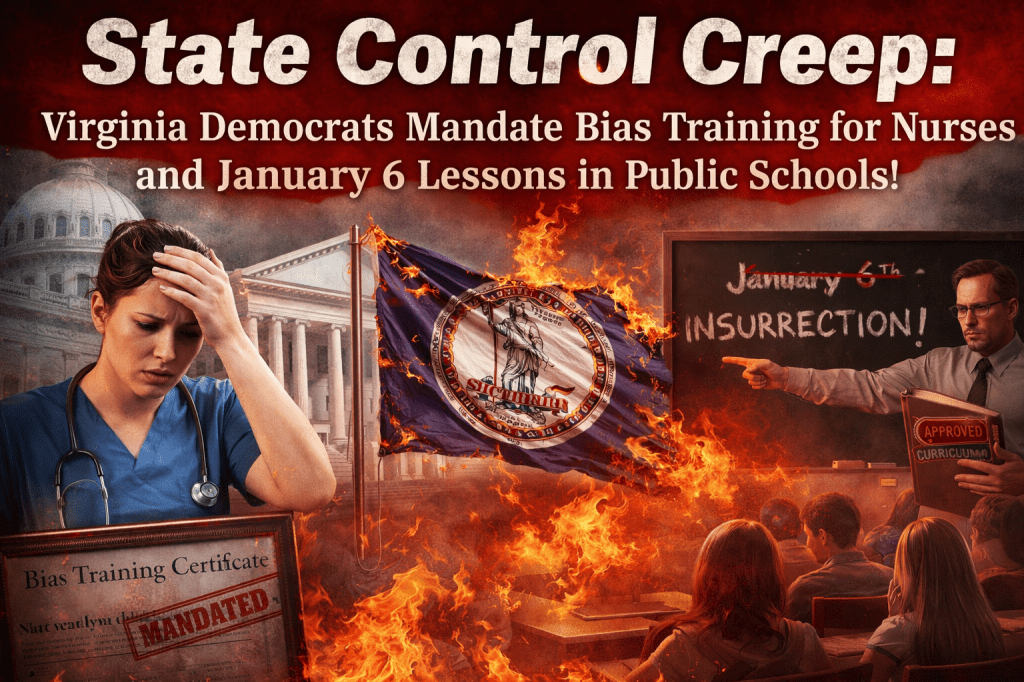
The proposals—Senate Bill 22 and House Bill 333—would impose new state-directed requirements on licensed nurses and public schools, reigniting a long-running debate over government overreach, professional autonomy, and political neutrality in public institutions.
What the Bills Do
Virginia General Assembly lawmakers have introduced:
Senate Bill 22
Sponsored in the Senate and advanced through committee, SB 22 would require licensed nurses and certain medical professionals to complete mandatory “bias reduction training” as a condition of license renewal. The training would be determined and enforced by state boards, embedding the requirement directly into continuing education standards.
Supporters frame the bill as a healthcare equity measure. Critics argue it effectively forces ideological coursework on professionals already facing burnout, staffing shortages, and increasing regulatory burdens.
House Bill 333
HB 333 targets K–12 education, authorizing school divisions to offer instruction on the January 6, 2021 Capitol riot—while explicitly restricting how the event may be described. The bill bars any curriculum or instruction that portrays the events as peaceful protest or references claims of widespread election fraud.
Opponents say the bill crosses from education into state-mandated political narrative enforcement, setting a precedent for Richmond dictating not just what schools may teach—but what they may not say.
A Break From Virginia’s Limited-Government Tradition
For decades, Virginia Republicans—often citing principles of federalism and local control—have resisted using state power to mandate specific ideological or philosophical instruction in classrooms. A frequently cited example is an earlier GOP-backed effort to require teaching the Federalist Papers, which was ultimately withdrawn over concerns about imposing top-down curricula.
Democrats, by contrast, appear increasingly comfortable wielding state authority to shape cultural and political understanding—whether in healthcare licensing or public education.
Critics argue this asymmetry matters.
“When one side refuses to mandate anything out of fear of being called ‘statist,’ and the other side has no such hesitation, the result isn’t neutrality—it’s ideological capture,” said one Northern Virginia education advocate.
Nurses, Teachers, and the Cost of Compliance
Virginia already faces staffing pressures across healthcare and education. Mandates that add compliance requirements—especially ones tied to contested ideological frameworks—risk further discouraging entry into these professions.
Healthcare groups have warned that additional licensing hurdles may accelerate nurse attrition, particularly among experienced professionals nearing retirement. Education advocates raise similar concerns, noting that curriculum mandates often invite litigation, confusion, and political conflict at the local school board level.
Rather than focusing on math proficiency, literacy rates, or classroom discipline, critics say Richmond lawmakers are prioritizing symbolic politics over measurable outcomes.
The Bigger Question: Who Decides “The Truth”?
Supporters of HB 333 argue that January 6 is a settled historical matter and that preventing “misinformation” in schools is a legitimate government function. Opponents counter that legislating acceptable interpretations of recent political events sets a dangerous precedent—one that could easily be expanded or reversed depending on who holds power.
Once the state claims authority to define political truth in classrooms or professional licensing, the question becomes less about January 6—and more about what comes next.
Why This Matters
These bills are not isolated proposals. Together, they reflect a broader shift in Democratic governance philosophy: away from institutional neutrality and toward explicit cultural and ideological direction enforced through state power.
For Virginians who value limited government, local control, and professional independence, SB 22 and HB 333 raise a fundamental concern:
If Richmond can mandate ideology for nurses and teachers today, what stops it from expanding those mandates tomorrow?
As the General Assembly moves forward, voters may soon decide whether this is the direction they want their commonwealth to take.
Support Independent Journalism
Virginia Bay News is part of the Bay News Media Network — a growing group of independent, reader-supported newsrooms covering government accountability, courts, public safety, and institutional failures across the country.
Support independent journalism that isn’t funded by political parties, corporations, or government agencies
Submit tips or documents securely — if you see something wrong, we want to know
Independent reporting only works when readers stay engaged. Your attention, tips, and support help keep these stories alive.
 Virginia Bay News